
What are the potential side effects of using IGF-1 LR3?
There’s no controlled human safety data for IGF-1 LR3. The closest guide is recombinant native IGF-1 (mecasermin), where hypoglycemia is the most common adverse effect in clinical use. IGF-1 is structurally close to insulin and increases glucose uptake, so low blood sugar is a central concern for an analog built to stay active longer.
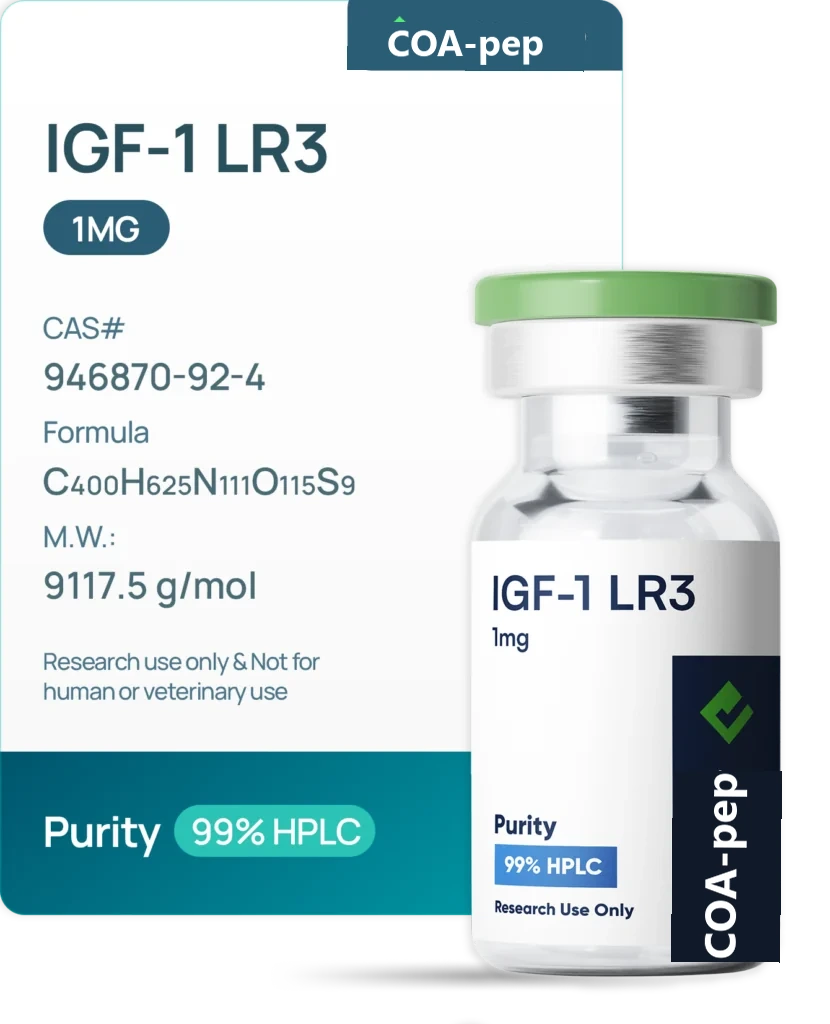
Cell growth is the other concern. IGF-1 signaling helps cells divide and resist programmed cell death, and reviews link higher IGF-1 signaling to the growth of several cancers. Long-term effects are unknown, IGF-1 LR3 isn’t for human use, and animal studies should include glucose monitoring. Lot testing is covered on our lab testing page. See the specs for our IGF 1 LR3 Peptide.
 English
 French
 Spanish